
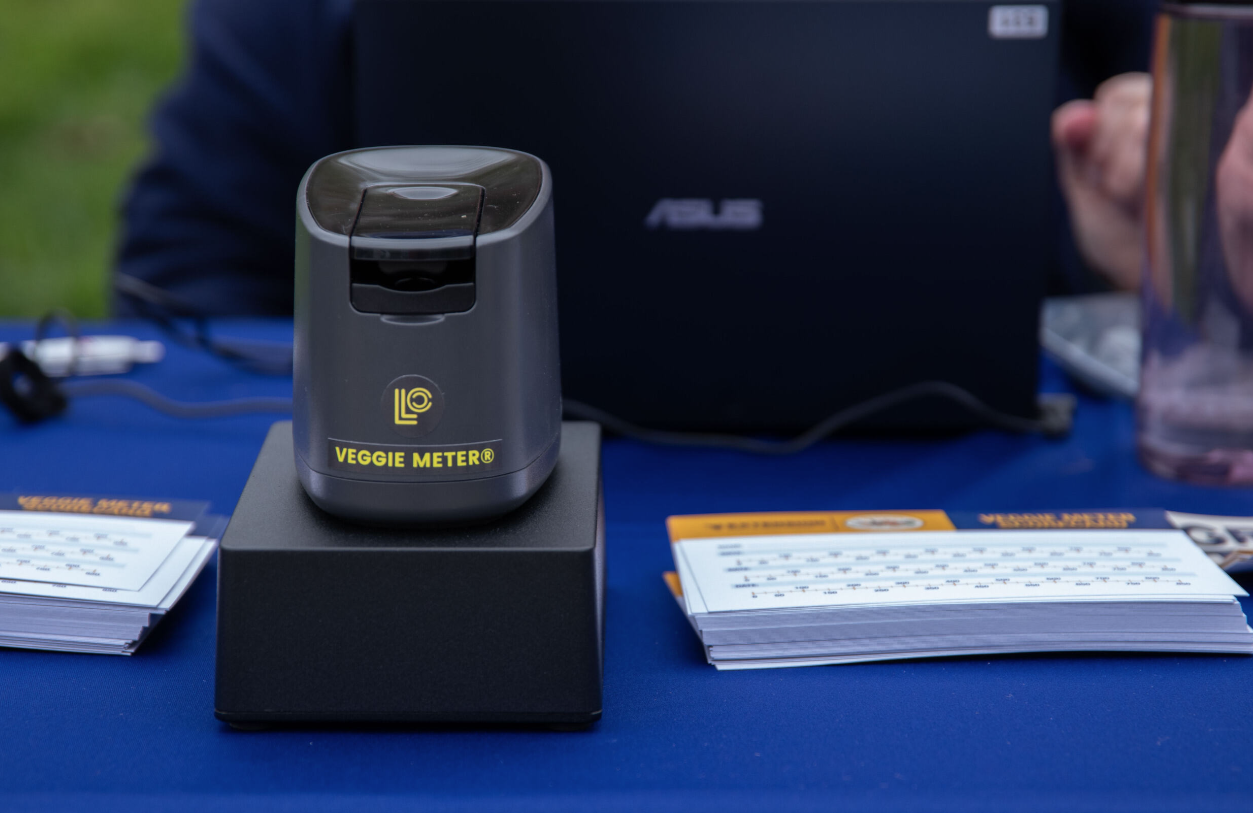
The West Virginia Department of Human Services (DoHS) is piloting new technology to evaluate the impact of FARMacy WV: Prescriptions for Produce, a program connecting participants with fresh, local produce and nutrition education as a formal part of their medical care plan to address food insecurity and chronic illness.
Throughout the program, FARMacy participants have been learning how incorporating more fruits and vegetables into their diets can make a difference in their overall health. Along with improving fresh food access, new technology now allows Food is Medicine programs like FARMacy WV to measure the health benefits of eating more fruits and vegetables more precisely.
Using reflection spectroscopy paired with a non-invasive finger scan, the Veggie Meter determines skin carotenoid levels, natural compounds that come from fruits and vegetables, and serves as antioxidants to help neutralize free radicals.
West Virginia is the first state permitted to use USDA funding to objectively evaluate nutrition programs aimed at increasing fruit and vegetable intake among children and adults. FARMacy WV, supported in part through the WVU Extension Family Nutrition Program and SNAP-Ed, was established in 2016 and expanded in 2020 to increase access to fresh foods and nutrition education across the state. There are currently three Veggie Meters in use throughout West Virginia, helping collect valuable data on how programs like FARMacy WV impact community health.
“Data is one of the most powerful tools we have to inform decision-making and drive meaningful change in our public programs,” said Alex J. Mayer, Cabinet Secretary of the West Virginia Department of Human Services. “This initiative represents another intentional step in West Virginia’s broader journey to strengthen health outcomes and build a healthier future for our communities. Tools like the Veggie Meter help us better understand the impact of preventive programs and demonstrate that improving nutrition access can directly support long-term wellness in our communities.”
Gina Wood, a Registered Dietitian and Specialist with the WVU Extension Family Nutrition Program, oversees FARMacy WV in the Mid-Ohio Valley region and recently collected Veggie Meter scores among participants in Jackson County. “Overall, the 23 participants were so curious about the new technology, and once I explained it, they were eager to test it out,” said Wood. “While the results are preliminary, participants significantly increased their scores over the course of the program. At the end, there were proud smiles, cheers, and high fives as they saw their scores improve and supported one another’s progress.”
By combining local agriculture, nutrition education, and innovative evaluation tools, the Food is Medicine program, like FARMacy WV, continues to strengthen West Virginia’s commitment to preventive health and community well-being. DoHS is proud to support efforts that bring together state, local, and community partners to build a healthier future for all West Virginians.